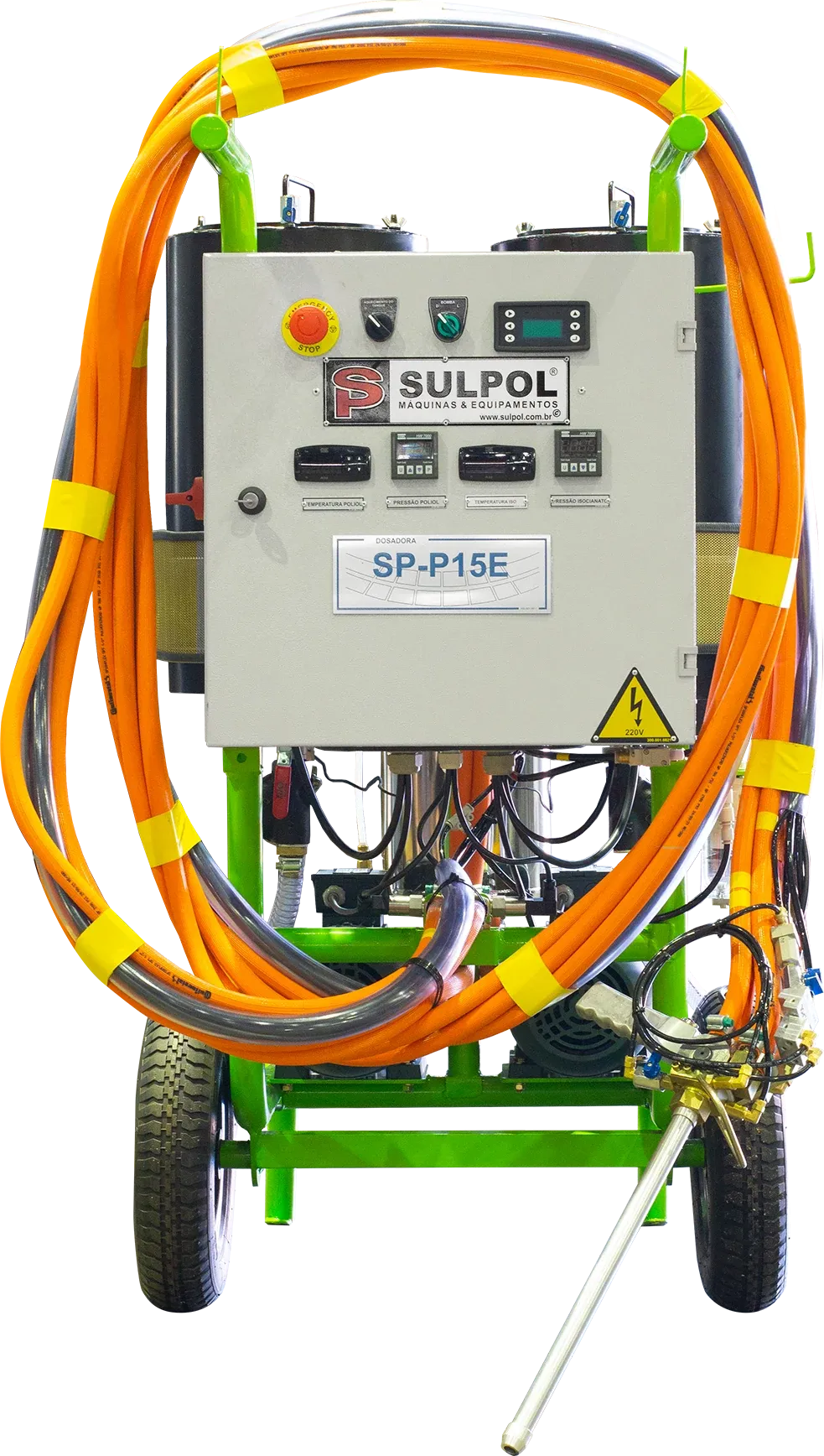
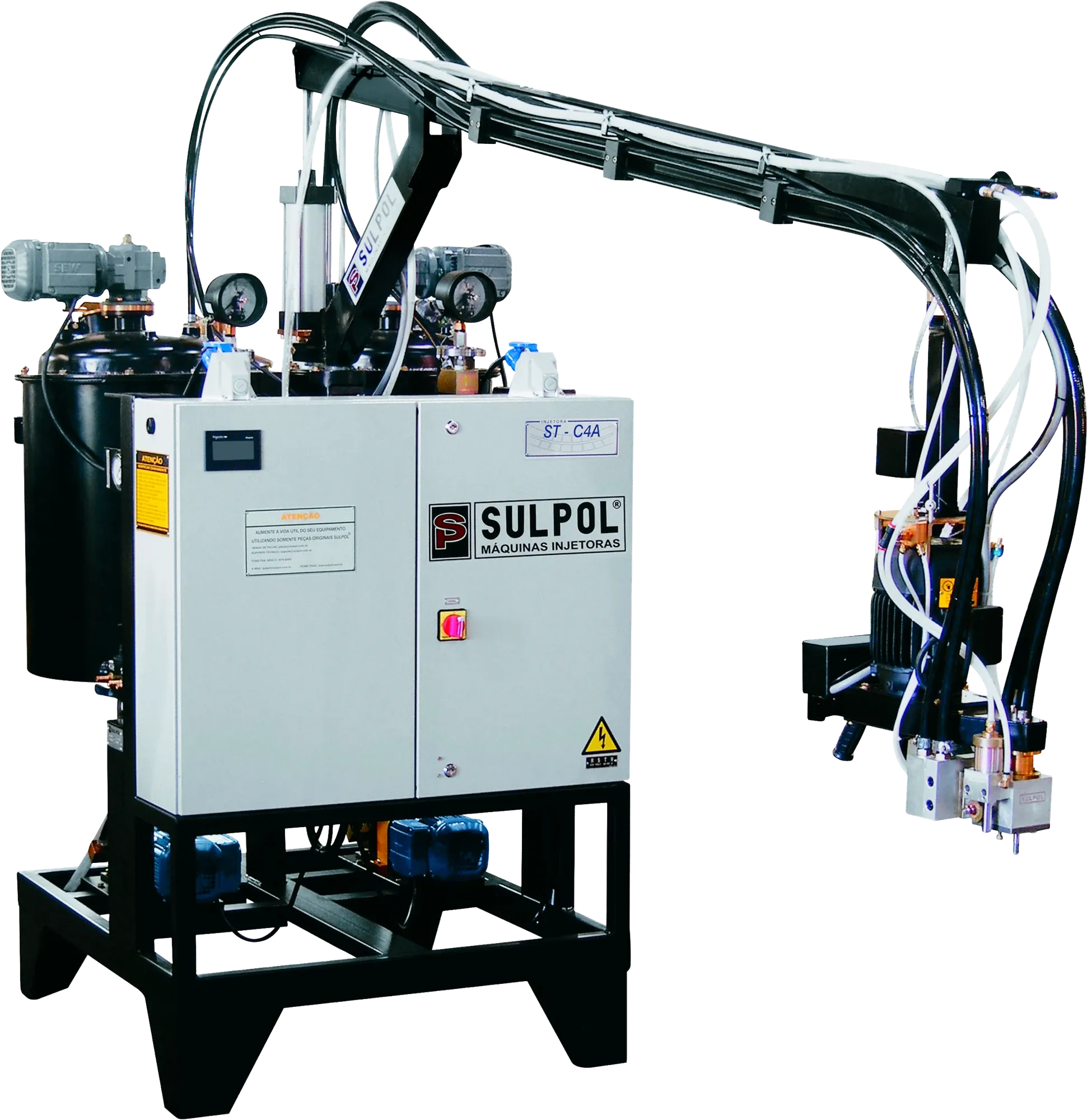
Low pressure
ST-C low-pressure metering machines
Dynamic mixing for flexible, integral-skin, rigid and semi-rigid foams.
In-house polyurethane machinery engineering since 1989
Priorities
Industrial and commercial refrigeration, insulated panels and roof tiles, and automotive suppliers.
All applicationsArticles in Portuguese
Recent article · PT
Dosadora ou injetora de poliuretano? Qual a diferença e como escolher
Read articleSafety and fashion footwear
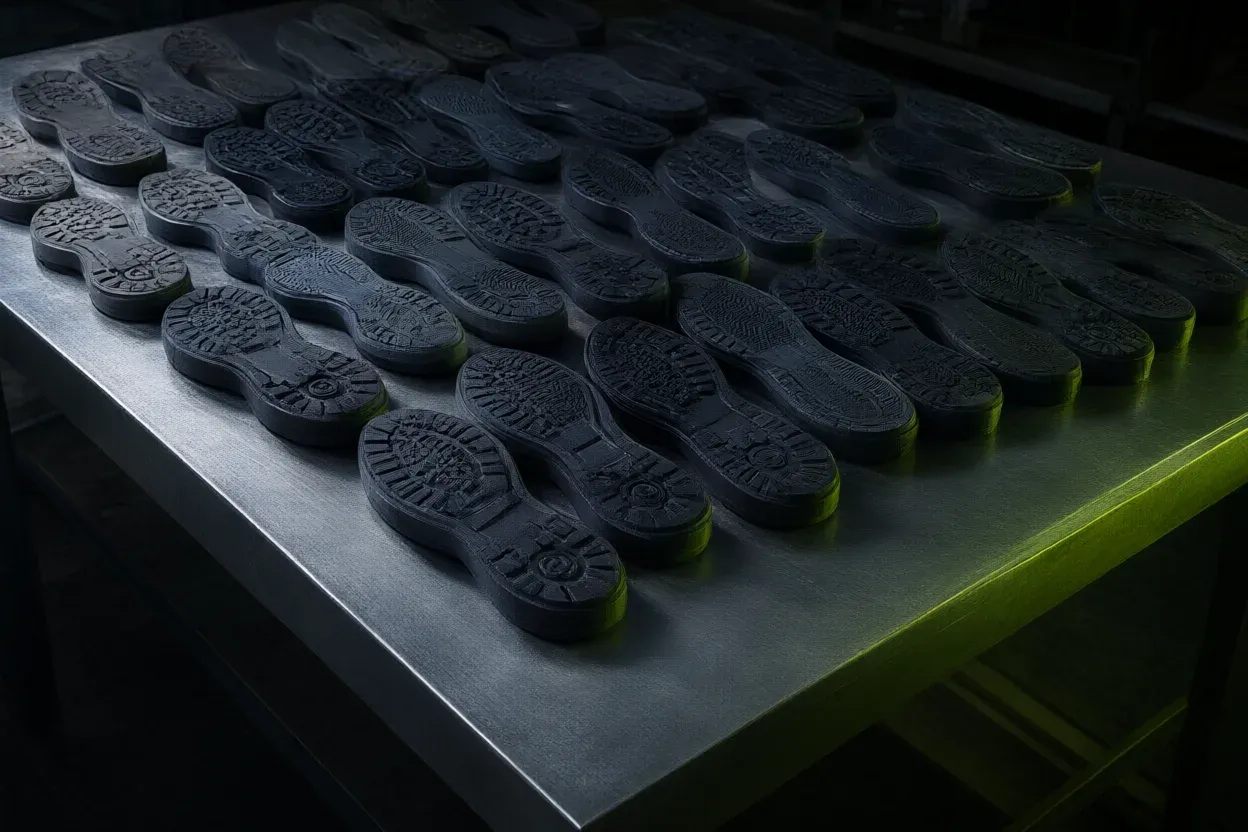
Soles, insoles and direct injection onto the upper, single or dual density.
The process
Footwear was one of Sulpol’s first markets. Soles, insoles and direct injection onto the upper call for exact metering, homogeneous mixing in two-component and multi-colour work, quick colour and mould changes, and stations arranged so the operator — or the automation — keeps a steady pace.
The STAR 300S line combines metering of up to 7 kg/min at a 1:1 ratio, modular mould carriers from 6 to 36 stations and up to 5 colours. It ranges from the classic model to the automated STAR 300S-R, which can exceed 500 pairs per hour in safety soles.
Steps
Reference flow. Each project defines the steps included and each supplier’s responsibilities.
Diagnosis
You do not need every answer. They structure the conversation with our engineering team and with your PU system supplier.
Send my answersRelated solutions
Recommending a solution for this application does not replace analysis of the material and process.
Low pressure
Dynamic mixing for flexible, integral-skin, rigid and semi-rigid foams.
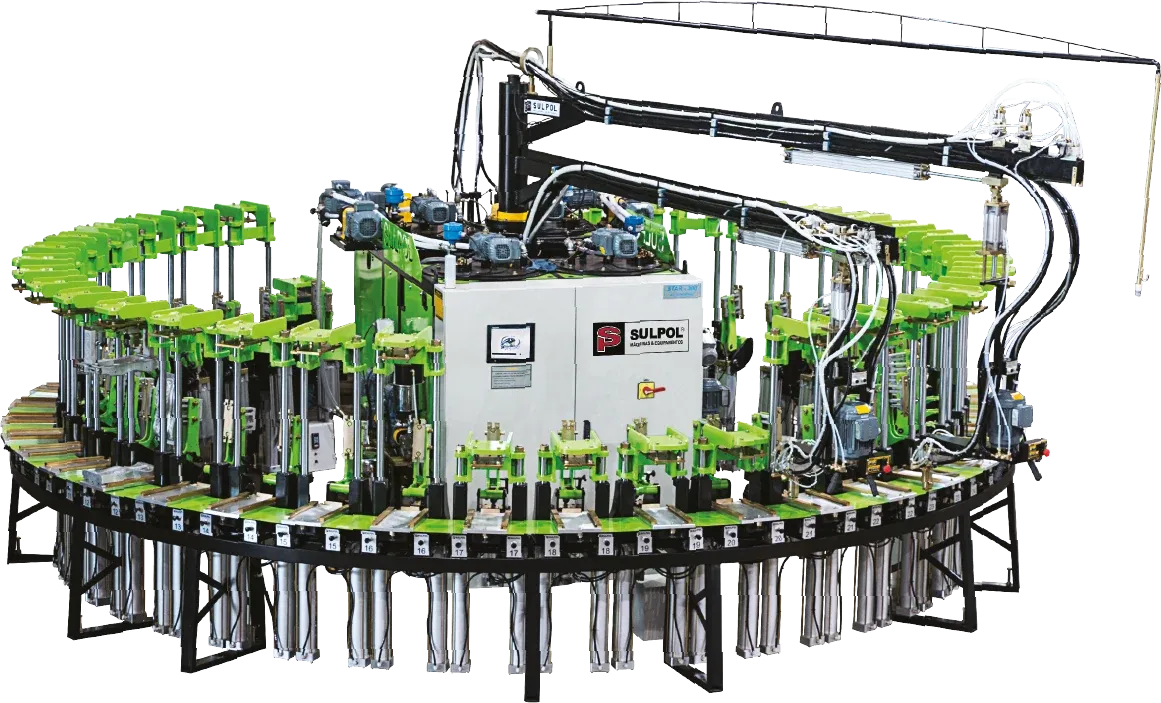
Footwear
Soles, insoles and direct injection onto the upper: up to 36 stations, up to 5 colours, automated models.
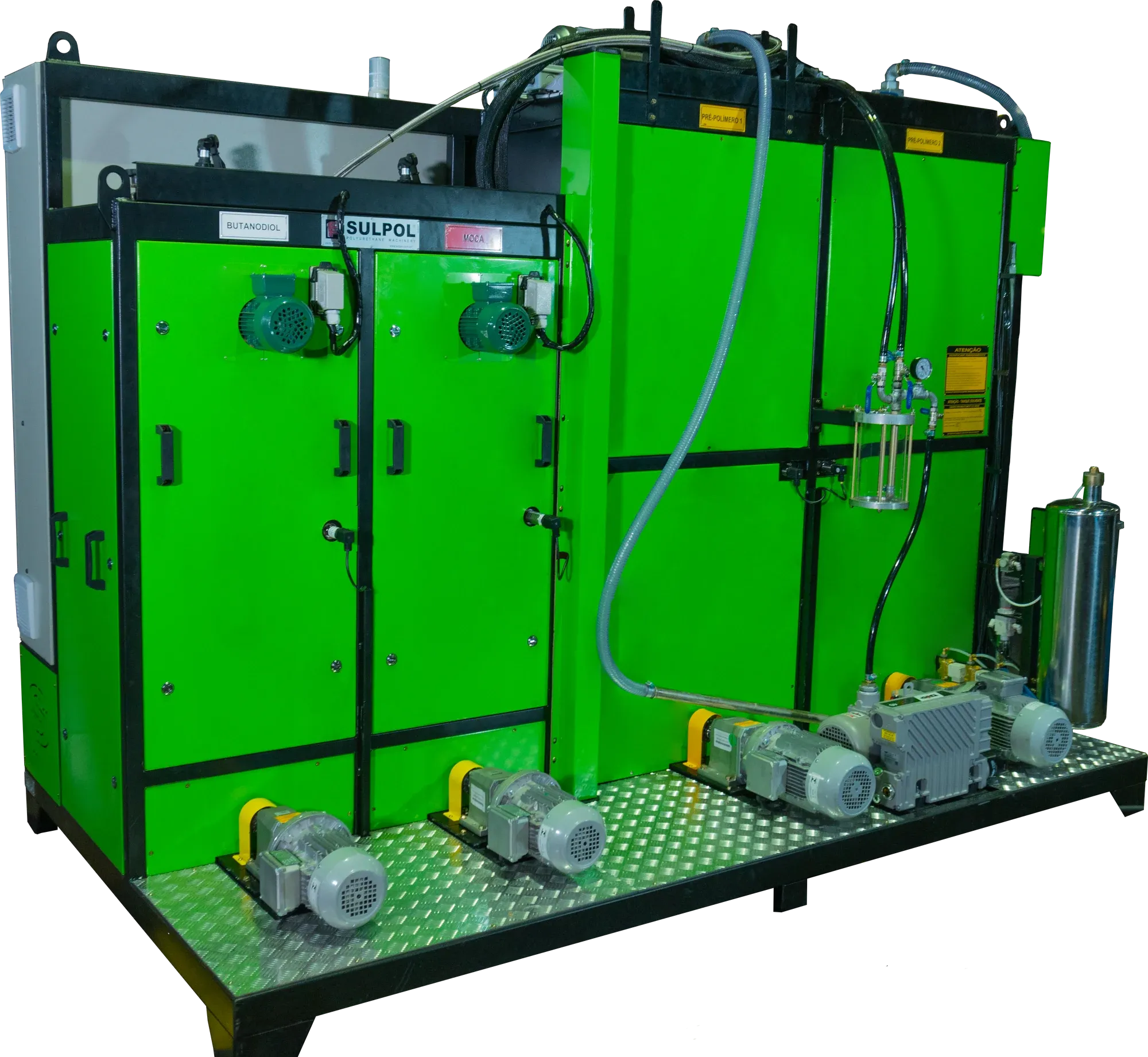
Components
Gear and axial piston pumps for high- and low-pressure metering.
Other applications
Application engineering
We will look at your application, target output and metering requirements to assess the right equipment configuration.